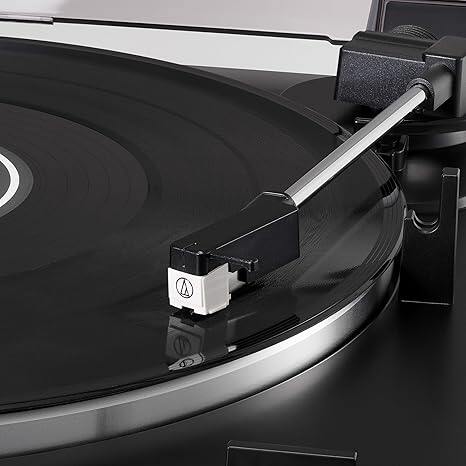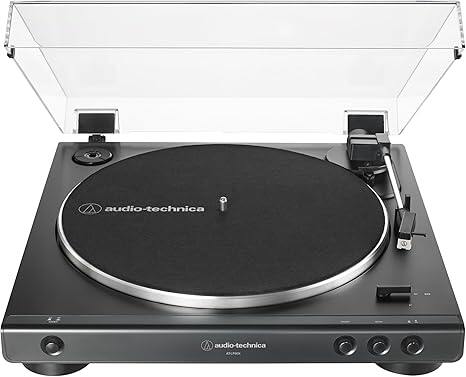


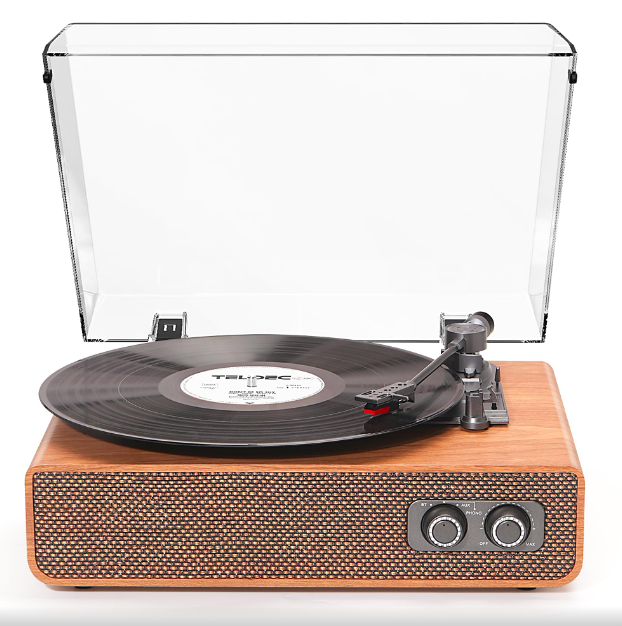
A record player (also called a turntable) is a device that plays music stored on vinyl records — those large, grooved black discs that were the main way people listened to music before CDs and streaming. They’ve made a big comeback in recent years for their warm sound and the whole ritual of putting on a record.
How it works
- The record spins on a flat platter, usually at 33⅓, 45, or 78 revolutions per minute (RPM), depending on the record.
- A needle (stylus) sits in the tonearm and rests gently in the record’s grooves.
- As the record spins, the tiny bumps and wiggles in the groove vibrate the needle.
- Those vibrations get converted into an electrical signal by the cartridge.
- The signal is amplified and sent to speakers, turning it back into sound you can hear.
Key parts to know
- Platter – the round surface the record sits and spins on
- Tonearm – the arm that holds the needle and moves across the record
- Stylus/Needle – the tiny tip that actually touches the grooves
- Cartridge – converts the needle’s vibrations into an electrical signal
- Plinth/Base – the body/housing everything sits on
- Preamp (phono preamp) – boosts the weak signal so it can be played through regular speakers (some players have this built in, some don’t)
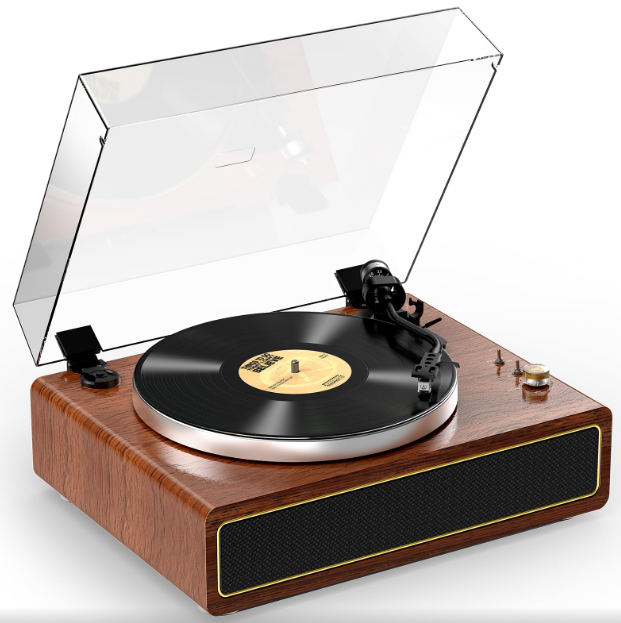
Types of record players
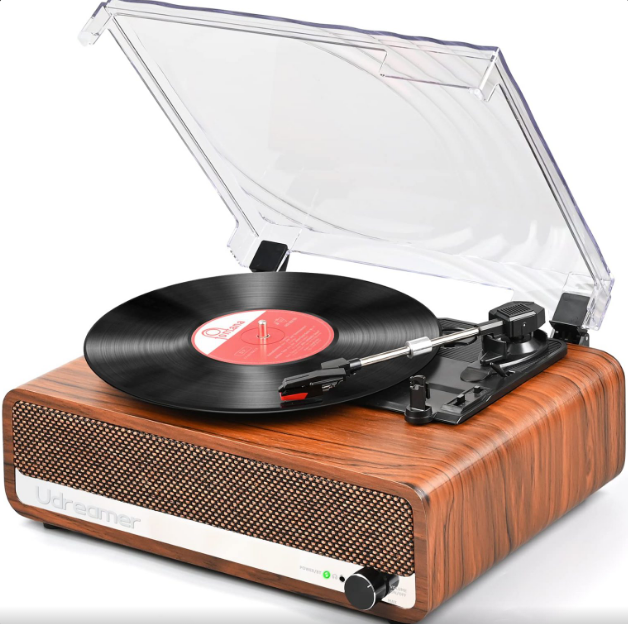
- All-in-one / suitcase style – built-in speakers, very beginner-friendly, plug and play
- Component turntables – no built-in speakers; you connect them to an external amp/receiver and speakers for better sound
- Belt-drive – the motor spins the platter via a rubber belt (quieter, gentler on records)
- Direct-drive – the motor spins the platter directly (more common with DJ setups, sturdier)
What to check before buying
- Does it have a built-in preamp, or will you need a separate one?
- Does it have built-in speakers, or do you need your own speaker setup?
- Can the speed (33/45/78 RPM) be adjusted for different record sizes?
- Is it belt-drive or direct-drive?
A word of caution
Some cheap “suitcase” record players can actually damage your records over time because of poorly calibrated tonearms/needles that track too heavily on the groove. If you’re serious about building a vinyl collection, it’s often worth spending a bit more on a decent entry-level turntable (brands like Audio-Technica or U-Turn are popular beginner picks) rather than the cheapest all-in-one option.